

China-Africa Youth Innovation Network: Green Skills Driving a Sustainable Future
With the 2024 Forum on China-Africa Cooperation (FOCAC) Summit drawing near, a series of pre-summit activities are in full swing. On August 29th, as an important component of the summit, the “FOCAC: China-Africa Roundtable Dialogue on Ecological Environment and Climate Change” Shanghai parallel roundtable event was successfully held. Among these, the parallel roundtable forum themed “China-Africa Youth Innovation Network – Green Skills Leading a Sustainable Future” stood out, attracting young representatives, environmental experts, and industry leaders from both China and Africa to gather at the Peace Academy to jointly explore innovative solutions and practices for youth climate action in China and Africa.
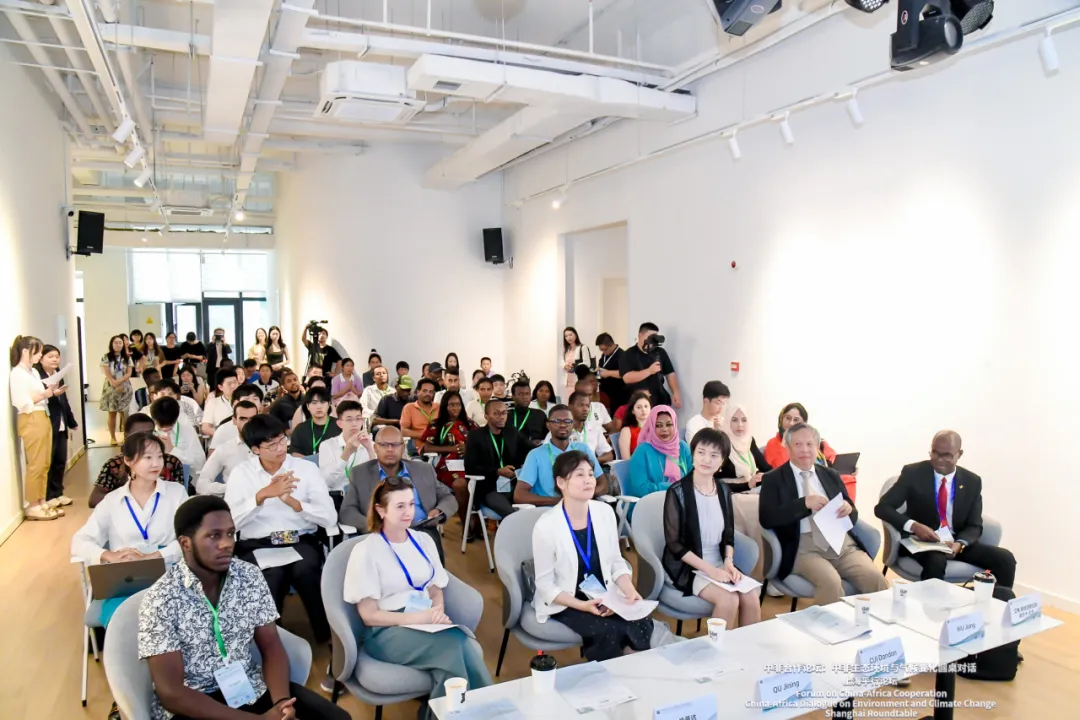
The event kicked off under the moderation of Zhang Yan, Partnership Specialist of the UNICEF China Office. Subsequently, Cui Dandan, Director-General of the Department of International Cooperation of the Ministry of Ecology and Environment, Amanda BISSEX, Deputy Representative of UNICEF China, Wu Jiang, former Executive Vice President of Tongji University and Dean of the College of Environment and Sustainable Development (jointly established by UNEP and Tongji University), and Qu Jinning, Director-General of the Shanghai Municipal Ecological Environment Bureau, delivered opening remarks for the forum. They all emphasized the important role of youth in addressing climate change and promoting sustainable development, and expressed high expectations for China-Africa youth cooperation.
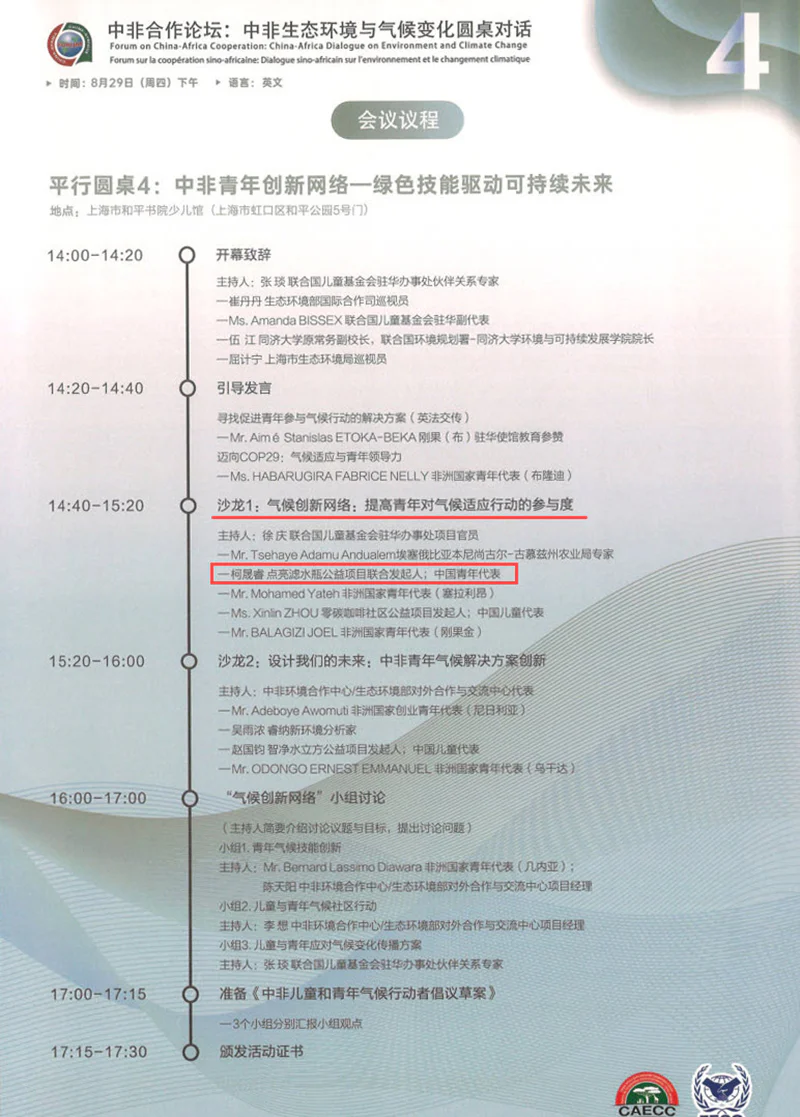

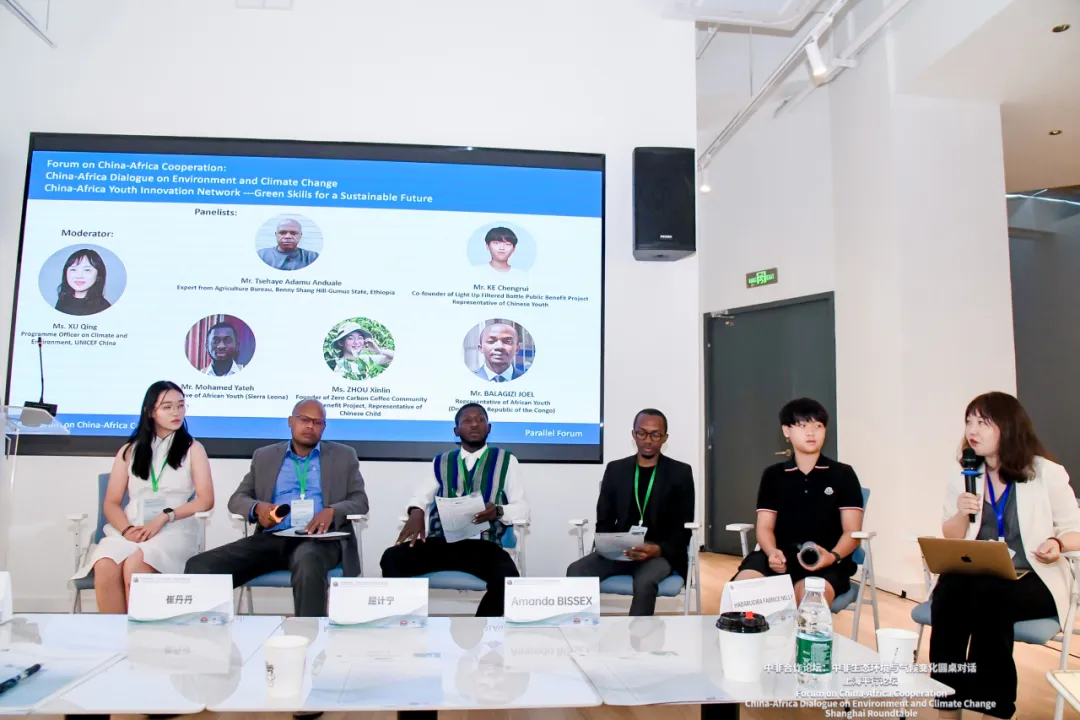
In addition to the main forum discussions, two salon sessions were also organized, titled “Climate Innovation Network: Enhancing Youth Participation in Climate Adaptation Actions” and “Designing Our Future: Innovative Climate Solutions by China-Africa Youth.” These salons provided a platform for young people from China and Africa to showcase their innovative thinking and share experiences, further promoting cooperation and innovation among them in the field of climate action.
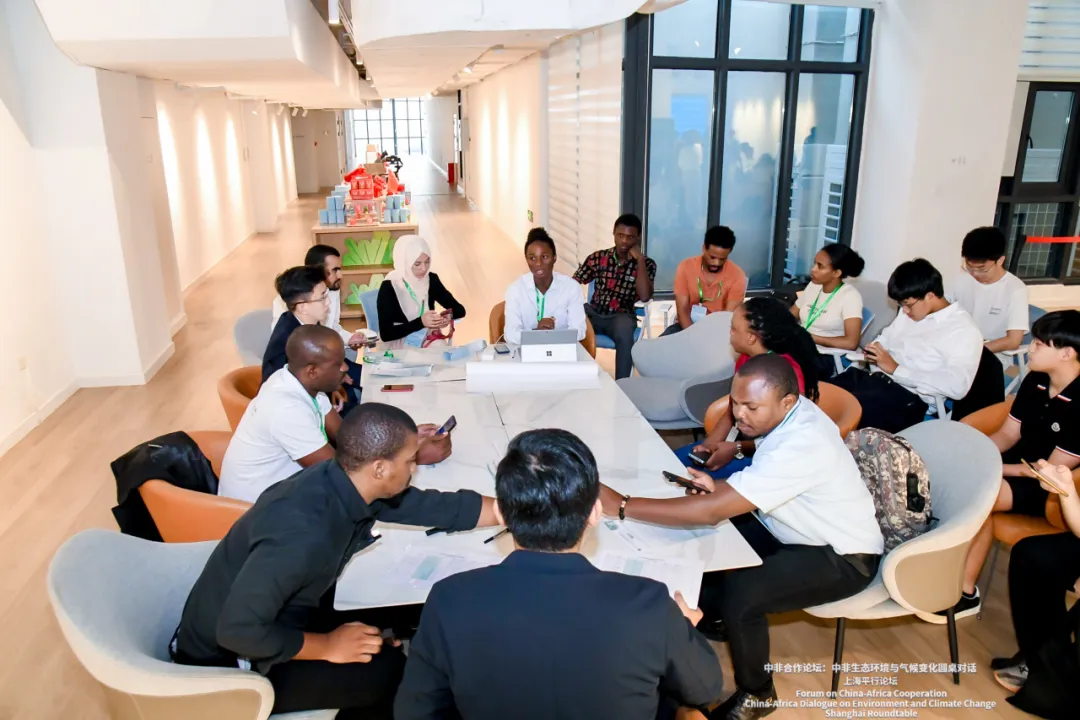
During the panel discussion session titled “Climate Innovation Network,” participants were divided into three groups to conduct in-depth discussions on topics such as “Youth Climate Skills Innovation,” “Children and Youth Climate Community Actions,” and “Communication Strategies for Children and Youth in Addressing Climate Change.” These discussions not only enhanced mutual understanding between Chinese and African youth but also provided new ideas and directions for their joint efforts in tackling climate change challenges.
Sources: United Nations Environment Programme, World Resources Institute, Fosun Foundation, Department of International Cooperation and Exchange of the Ministry of Ecology and Environment, Shanghai Peace Institute, Sanjiangyuan National Park.